Therapy Professionals

  • Home
    • History >
      • Cantabrainers Choir
      • Tribute to Clare O'Hagan
    • Client Information
    • Rights and Responsibilites
    • Careers
    • Testimonials
  • Services
    • Assessment, Treatment & Consultation
    • Workplace/home safety
    • For organisations
    • Nail Trimming
  • Therapies
    • Physiotherapy
    • Speech-Language Therapy >
      • Communication
      • Swallowing
    • Music Therapy
    • Occupational Therapy
    • Dietetics
  • Gift Vouchers
  • Contact
  • Information
    • Information and Handy Hints
    • Blog
    • Links
    • Facebook
    • Events
    • Newsletters
  • Home
    • History >
      • Cantabrainers Choir
      • Tribute to Clare O'Hagan
    • Client Information
    • Rights and Responsibilites
    • Careers
    • Testimonials
  • Services
    • Assessment, Treatment & Consultation
    • Workplace/home safety
    • For organisations
    • Nail Trimming
  • Therapies
    • Physiotherapy
    • Speech-Language Therapy >
      • Communication
      • Swallowing
    • Music Therapy
    • Occupational Therapy
    • Dietetics
  • Gift Vouchers
  • Contact
  • Information
    • Information and Handy Hints
    • Blog
    • Links
    • Facebook
    • Events
    • Newsletters

Information and Handy Hints

December 22nd, 2022

22/12/2022


Two questions can reveal mobility problems in seniors
 
 
Authors:
      Alessio Bricca, Postdoc, University of Southern Denmark
Søren T. Skou, Professor, University of Southern Denmark

Hundreds of millions of people of all ages worldwide live with two or more chronic conditions – commonly defined as multimorbidity.  Those living with it are found to have poorer physical and mental health, a high risk of being admitted to hospital and a higher risk of dying prematurely compared to people with only one chronic condition.
 
Given that the number of people living with multimorbidity is only expected to rise in the future, finding better treatments is considered the next major health priority.
 
But despite multimorbidity being a leading cause of disability, research on treatments is still in its relative infancy.  Few studies have investigated the long-term treatment options – and unfortunately the results of the studies done most often offer negligible improvements.
 
People with multimorbidity require treatments that will improve their physical, mental, emotional and social heath, and of late more and more research is showing that exercise may actually be a broad-spectrum treatment for those living with multimorbidity and offer many of the improvements patients want.
 
Currently, multi-morbidity is managed by treating each chronic condition separately using available medicines.  However, this approach may not reduce symptoms sufficiently, and can have additional adverse health effects.  As many people consult several health care providers, and also end up taking multiple drugs (often at least one for each condition) there is a risk of adverse events that can be inconvenient and unsatisfactory for patients.
 
Exercise as medicine
 
Research has shown that exercise is an effective treatment for more than 26 chronic conditions, including psychiatric diseases such as depression, anxiety, stress and schizophrenia; neurological diseases including dementia, Parkinson’s disease, multiple sclerosis; metabolic diseases including adiposity, hyperlipidaemia, metabolic syndrome, polycystic ovarian syndrome, type 1 and 2 diabetes; cardiovascular diseases including hypertension, coronary heart disease, heart failure, cerebral apoplexy, and intermittent claudication; pulmonary disease including chronic obstructive pulmonary disease, asthma, cystic fibrosis; musculoskeletal disorders including osteoarthritis, osteoporosis, back pain, rheumatoid arthritis; and cancer.  Research also shows exercise could potentially prevent at least 35 chronic conditions from developing.
 
Thanks to the overall effects on health such as lowering blood pressure, improving joint health and cognitive function, exercise therapy can benefit a range of chronic conditions.  It also has a lower risk of negative side effects compared to pharmalogical treatments.  What should be noted, however, is that exercise requires physical effort, and like pharmalogical treatments, the effects will diminish if the patient stops partaking.
 
The real question, could exercise therapy benefit people with multiple chronic conditions as well?
 
A recent review assessed the effect of exercise therapy on the physical and mental health of people with at least two of the following chronic conditions: osteoarthritis of the knee or hip, hypertension, type 2 diabetes, depression, heart failure ischemic heart disease and chronic obstructive pulmonary disease.  The review established 23 studies that looked at adults 50 to 80 years of age.
 
The exercise therapy interventions used in the studies were at least partially supervised by a physiotherapist or an exercise physiologist.  Most lasted 12 weeks on average and exercise was performed two to three times week, starting from low intensity and progressing to moderate to high intensity.  The exercise therapies included were aquatic exercise, strength training, aerobic training and tai chi.
 
The review results showed unequivocally that exercise therapy improved quality of life, and reduced anxiety and depression symptoms.  The benefits were higher in younger patients and patients who had higher depression symptoms before starting exercise therapy.  This highlights that people with severe depression - often considered ineligible for exercise due to their depression severity – may benefit highly from exercise therapy.
 
Patients who participated in exercise therapy were also able to walk longer.  Those taking part walked on average 43 metres more over six minutes than those not taking part in the exercise interventions.  This improvement appeared to be important for the patient and it reduced their disability to a noticeable level. Exercise therapy also didn’t increase the risk of non-serious side effects, such as knee, arm or back pain, or falls and fatigue.  What’s more, it reduced the risk of hospitalisation, pneumonia and extreme fatigue.
 
The benefits were similar across all the combinations of chronic conditions included in the study, effectively concluding that exercise could be a safe and effective therapy instead of increasing drug prescription in people with multiple chronic conditions.
 
Together with patients and healthcare professionals, many aged care facilities have or are developing and testing exercise therapy and self-management programmes to help carers understand whether personalised exercise therapy and self-management is effective in managing and treating multi morbidity conditions in their patients.
 
In the meantime, people with multi morbidity can improve mental and physical health by exercising two to three times a week.  Aerobic workouts, strength training or a combination of the two can promote similar health benefits regardless of the conditions a person lives with.
 
 
Authors:
      Alessio Bricca, Postdoc, University of Southern Denmark 
       Søren T. Skou, Professor, University of Southern Denmark

 
From Aged Care NZ Issue 02 2021

December 15th, 2022

15/12/2022

 
Picture

Christmas Newsletter
​

It's Christmas time again and the rush doesn't get any better with the years

The team at Therapy Professionals Ltd

​hope you have a lovely break of Christmas and the New Year


​Christmas and New Year Treats

 
If you're catering for someone with a swallowing problem during the festive season, it can be hard to know what you can give them or even to remember these treats are food. 
 
Here are some ideas:
 
Pureed diet (smooth and uniform texture)

  • chocolate sauce
  • flavoured toppings eg caramel, strawberry
  • melted chocolate – try adding a little whipped cream to help slow the resetting time
  • chocolate mousse
 
Minced and Moist diet: (needs to be very finely cut or mashed)
 
All options suggested for a pureed diet plus:

  • finely grated chocolate
  • mashed cake or muffin with cream or yoghurt
  • trifle, tiramisu (with custard, cream or ice cream)
 
Easy to Chew diet: (must be able to be easily and cleanly cut with the side of a fork)
 
All of the options in “pureed” and “minced and moist” plus:

  • chocolate fudge
  • Russian fudge
  • some soft centred caramels
  • muffins or cake with cream or yoghurt
  • softened chocolate (placed in microwave until soft)
  • Turkish delight (made with jelly and icing sugar)
  • Some soft lollies like ‘explorers’ and ‘bananas’ (test first, if left out on the shelf too long they become hard)
https://www.therapyprofessionals.co.nz/uploads/4/9/5/2/49523375/can_people_on_modified_diets_have_food_treats_.pdf
Picture
Enable Equipment 
 
Repairs and Maintenance
The client or residential provider to contact one of the subcontractors listed below: 
Keep this information by your phone
 
More Mobility/ Mobytech Ltd 
 113 Blenheim Road, Christchurch 8041
Phone:   (03) 348 3460 Option 2 or 027 516 2340                   
Email:    [email protected]                                                                                                                                                                                                                                                         Website: http://www.moremobility.co.nz

 Personal Mobility Systems (Wheelchair Services (SI) Ltd)  (not generally a mobile service)    
  29 Shakespeare Road, Christchurch 8240 
 Phone:        (03) 366 8815 or 0275 383 584 
Email:           [email protected] 
Website        www.mobilitysystems.co.nz
 
Rehab Enterprises, mobile workshop.
Contact Owen Henwood on 
phone: 027 230 5974 or email: [email protected] 
 
It is recommended repairs should be pre-arranged. A phone call will ensure a prompt and efficient service. 

Alteration or Modification of Equipment

If you wish to have a piece of equipment altered or modified this is not a repair or maintenance. Call the therapist. 
 
Returning Enable equipment
  • Phone 0800 ENABLE (0800 362 253), Mondays to Fridays from 8am to 5pm.
Or follow this link to email
https://www.enable.co.nz/services/equipment-for-disabled-people/equipment-returns/request-equipment-collection/


​Christmas gift Ideas for older people
 
It’s often hard to find useful presents for older relatives because they’ve got everything! Here are some ideas: 
  • a gift voucher for some therapy time these can be purchased, see our website
           https://www.therapyprofessionals.co.nz/gift-vouchers.html

  • a comfy chair, follow this link on choosing a chair https://www.therapyprofessionals.co.nz/uploads/4/9/5/2/49523375/choosing_a_comfy_armchair__.pdf
 
  • useful gadgets eg tap turners, can and jar openers, adapted garden equipment and plug pullers. These can be found at More Mobility and the Aspire Canterbury shop.
​Handy Information
 
Should you have time on your hands over the holiday season have a look at the Information page on our website http://www.therapyprofessionals.co.nz
 
Our therapists regularly prepare these information sheets for use by our clients.

Holiday period hours

Therapy Professionals office will be closed 12.30 pm 23 December and we reopen on 4 January 2023.
​

Between Christmas and New Year on the working days there will be an office person available by phone on 027 435 8970 for urgent enquiries.  
Some therapists will be on call over the Christmas period, should there be any urgent need.
Picture

December 06th, 2022

6/12/2022

 
Have you fallen or do you fear falling?
 
Four easy ways to remain surefooted and safe everyday,
from an 80 year old ex physio
Picture
 
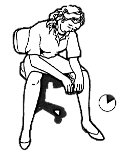
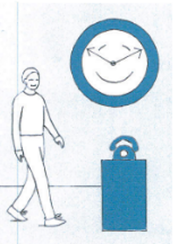
1.  Don’t rush

  • the faster you go, the bigger the mess
  • rushing is inefficient and hard on us
  • enjoy a steadier pace

​  Slow down

  • to answer phone or doorbell
  • to catch buses
  • when turning

Picture
Stop before looking

  • in shop windows
  • at scenery

Picture
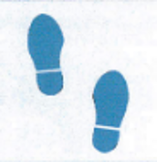
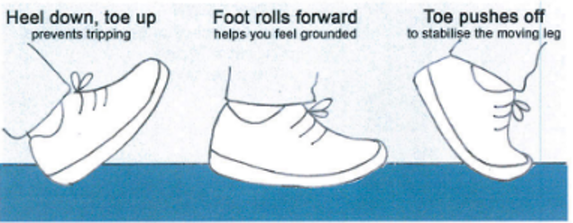
2.  Be aware of heel-roll-toe
 
As we get older we lose the spring in our step and the muscles that lift our toes weaken.  We need to compensate for these losses and walk safely.
 
 
Your feet matter
 
Wear firm fitting shoes, sandals or bare feet.
 
 
Feel the soles of your feet move inside your shoes.  They will tell you:

  • where your feet are
  • the kind of surface you are walking on
  • if your weight is evenly balanced.
 
Place feet slightly apart with toes slightly turned out.
 
 
Exaggerate the natural heel-roll-toe action:

Picture
​Practice heel-roll-toe whenever you walk
 
  • slowly for several weeks.  When you feel familiar with the action, take longer and quicker steps
  • from first step of the day, and when up at night (if drowsy take smaller steps with your feet wider apart).
  • when out walking: if you start to scuff or when paths are rough.
 
As many falls occur at home, heel-roll-toe is as important when you go from room to room as it is going from street to street. 
3.  Carry objects close to your body
 
To maintain good posture when you carry objects, stand tall with your neck and shoulders loose.
 
 
When walking and carrying:
 
  • stand talll
  • lean with the crown of your head keeping your feet well grounded
  • aim to keep your hands empty and arms free to swing
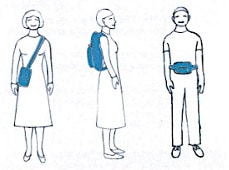
  • balance small items in pockets of your vest, jacket or coat
  • attach light bags to body
  • carry waterproofs and extras in a light backpack
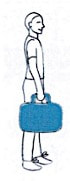
  • avoid awkward, uncomfortable bags and umbrellas.
Picture
Picture


​​If you must carry heavy objects, try not to hunch or lean towards the weight, even if it is on wheels.   Keep tall and straight, then the weight will seem lighter.


Picture
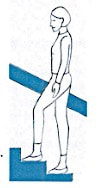
4.  Keep your legs strong
 
 
Climb hills and stairs when available.
 
Don’t always depend on sticks and handrails.
 
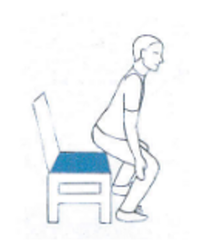
If hills and stairs aren’t available, standing up from sitting is a great exercise for thigh and core muscles.

Picture
​Stand up in three simple moves:
 
  1. Sit tall, relax neck and shoulders, look ahead.
  2. Bring head and shoulders forward.
  3. Straighten your knees to stand up.
 
Sit down again in three simple moves:
 
  1. Bring head and shoulders forward
  2. Bend your knees
  3. Gently lower

Do you need some hand-support to stand up?  If so, push through your feet using your legs as well.  You’ll be surprised how much your legs can and will do.
 
 
In conclusion
​

Establish these activities NOW, before you learn “special” balance exercises.  These habits will be with you when you are past doing the balance exercises.  They will be with you until the end of your life.
 
Brochure designed by Siobhan O’Hagan and written by Clare O’Hagan.
Available from Therapy Professionals Ltd

December 01st, 2022

1/12/2022

 
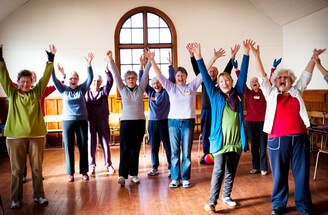
Exercise in Nursing Homes
How to design an exercise programme for nursing home residents

 
Dr Phil Handorf, Dip T, Bed PhD.
Phil is head of the Centre for Physical Activity in Ageing, Hampstead Rehabilitation Centre 
Adelaide and Chief Exercise Physiologist, Department of Geriatric and Rehabilitation 
Medicine, Royal Adelaide Hospital
​There is no doubt that physical activity is a sound pursuit for nursing home residents, but the difficulty lies in implementing suitable programmes for this population group. While the contradictions to exercise are no different to those applying to younger people, specific changes in programme design must be made in order to accommodate individual disabilities and limitations.
 
Contrary to popular belief, physical activity for the very old can be undertaken safely, despite the presence of a host of medical conditions.  For example, diabetes, chronic renal failure, stroke, cardiac disease, arthritis, depression, osteoporosis or dementia (which all may be evident in the same person) are not in themselves contraindications to physical activity.  Exercise may in fact offer benefits not easily achievable through traditional pharmalogical treatments.  There are, however, certain changes in normal functions that necessitate a medical examination prior to the commencement of any new physical activity.  These include acute fever, chest discomfort, musculoskeletal pain, uncontrolled diabetes, high blood pressure, sudden weight loss or a recent fall.  It is also important that when you design a programme for nursing home residents, the goals you set for the programme for are specifically tailored to the needs of the participants.  Suitable goals for this population group include:
 
  • Minimising the impact of physiological changes
  • Reversing the symptoms of disuse and lethargy
  • Increasing mobility
  • Supporting rehabilitation arising from acute and chronic illnesses
 
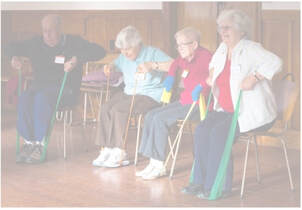
To date the most beneficial physical activity programmes for older people appear to encompass progressive resistance training (involving major muscle groups of the upper and lower limbs and trunk) performed at a relatively high intensity.  Given the reduced physical capacity of nursing home residents, strengthening programmes should encompass simple rather than complex tasks.  These may include chair-based and chair assisted exercise; water walking; range of motion activities; resistance band exercises for upper and lower   limbs; breathing and relaxation activities; and simple hand function actions.
 
Balance training is of considerable significance and should be incorporated into any physical activity programme for older people.

The emphasis should be on dynamic movements that challenge the centre of gravity and activities that govern muscle groups involved in upright posture.
 
Balance training should also be structured to progressively include more difficult postures (ie by decreasing the base of support) as the ability of the participant improves.
 
Some examples of good balance exercises (to be performed in the standing position, holding a chair or other support) include: feet shoulder width apart, extend arms slightly forward, raise both heels off the ground and hold for 10 seconds without the need for support, transfer body weight from one leg to another.
​Cardio respiratory training (to improve aerobic capacity) may well be either inappropriate or unachievable among certain nursing home residents.  As such, this form of physical activity should not take precedence over strength and balance work.
 
Upon implementation, however, a frequency of at least three sessions per week involving up to 20 minutes duration (at between 40% to 60% of heart rate reserve) is recommended.  Indeed, the duration of exercise has received greater attention recently and it is now recommended that far shorter periods of activity (even as low as two to three minutes) may have a beneficial effect.
 
Older adults can perform numerous exercises; however, as with younger individuals, there are several movements that are contraindicated.  These include: deep knee bends; toe touching with straight legs (standing); extreme extension of the lower back; jerking and sudden movements; breath holding; static or isometric exercises (unless specifically prescribed by a health professional); and full circle movements of the head, neck, trunk, ankles or wrists.  Many older people are hesitant about floor-based exercises and for some getting up off the floor is not practicable.  For many, however, floor work is quite achievable (provided adequate matting is used) and once the client has undergone some simple instructions about lowering to and rising from the floor, many exercises can be performed in this position.  Clearly, however, additional stand up assistance may be required depending upon individual needs.  Of course, the golden rule remains that any exercise that leads to pain or discomfort should be completely avoided.
 
 
Functional exercises
 
Functional fitness relates to an individual’s ability to perform the activities of daily living, and it should influence the objectives and programming of physical activity for older people.  As such, exercise should (if possible) reflect day-to-day activities.  Some examples include: partial neck rotations, upper body movements such as lifting, reaching, turning and pushing (eg chair dips); stair climbing movements such as stepping up and down off multi-levelled platforms (performed while seated in a chair); sit to stand to sit movements; and lower limb exercise such as heel raise and squats performed holding onto the back of a chair).
 
 
Warm up and cool down
 
An adequate warm up should be an important part of your programme.  Up to 10 or 15 minutes should be spent on the warm up phase, depending upon the functional capacity of your clients.  This time is critical to ensure a gradual increase in circulation and heart rate.  All joints should be engaged in the warm up. The cool down section is just as important and a similar amount of time should be spent in this segment of the programme.
​Chair based exercises
 
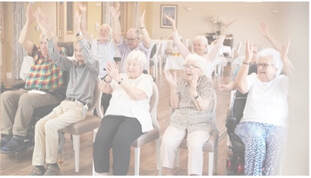
Chair based exercise plays an important role in physical activity programmes for the very old. Indeed, many chair-based exercises may also be adapted for use where the client is confined to bed.  Chairs without arms provide some benefits in regard to support for the upper limbs.  Having a chair that supports the back is important, as is the requirement for the client’s feet to be in touch with either the floor or another hard surface (eg telephone book).  The chair provides support for standing balance work and strengthening activities including exercise bands, ankle weight and dumbbells.
 
Strength training
 
Current guidelines for strength training include:
 
  • Work at an intensity of 70 – 80% of 1 repetition maximum
  • Repetitions should range from 8 to 15.
  • The speed of movement should range between 5 and 8 seconds per repetition
  • Aim to perform 1 to 3 sets of exercises
  • Initially at least one day, perhaps two days, of rest should be observed between each day of exercise.  A daily strengthening routine may eventually be attempted but research has shown that as little as two days per week is sufficient to maintain strength.
  • Progress should be deliberately slow with increase in resistance planned for every two to four weeks.
 
However, for instructors working with de-conditioned or frail people a more simplistic guide to strengthening exercise is as follows:
 
  • Start with a weight you can lift without too much effort; perform five repetitions
  • When you can easily do this, rest briefly then do it another five times (this is two sets)
  • Increase to three sets
  • When you can do this easily progress to lifting the weight 15 times in each set.
  • Once that’s easy, slowly increase the weight
 
 
Importantly
 
The initial resistance should always be specifically tailored to meet the needs of the individual and in some circumstances will involve extremely light resistances.
 
 
Conclusion
 
Participation in a physical activity programme is both a feasible and desirable pursuit for nursing home residents.  Of course, the benefit of exercise training matters little if the client does not take some pleasure from participating in the programme.  Enhanced compliance to physical activity is more likely to be achieved if the programme meets the social needs of your clients, rather than merely improving muscle strength or aerobic capacity.

    Author

    Shonagh O'Hagan
    and Therapists at Therapy Professionals

    Archives

    November 2025
    October 2025
    September 2025
    August 2025
    July 2025
    June 2025
    May 2025
    April 2025
    March 2025
    February 2025
    January 2025
    December 2024
    November 2024
    October 2024
    September 2024
    August 2024
    July 2024
    June 2024
    May 2024
    April 2024
    March 2024
    February 2024
    January 2024
    December 2023
    November 2023
    October 2023
    September 2023
    August 2023
    July 2023
    June 2023
    May 2023
    April 2023
    March 2023
    February 2023
    January 2023
    December 2022
    November 2022
    October 2022
    September 2022
    August 2022
    July 2022
    June 2022
    May 2022
    April 2022
    March 2022
    February 2022
    January 2022
    December 2021
    November 2021
    October 2021
    September 2021
    August 2021
    July 2021
    June 2021
    May 2021
    April 2021
    March 2021
    February 2021
    January 2021
    December 2020
    November 2020
    October 2020
    September 2020
    August 2020
    July 2020
    June 2020
    May 2020
    April 2020
    March 2020
    February 2020

    All

    RSS Feed

Quick Links
Physiotherapy
Speech-Language Therapy
Music Therapy
Occupational Therapy
Dietetics
Phone: (03) 377 5280
Email:   [email protected]
Hours:  8:30am-4pm, Monday-Friday
Office: 12 Coronation St, Christchurch 
Postal address: PO Box 7807,
​                             Christchurch 8240
Disclaimer
Therapy Professionals makes every effort to ensure that the information provided on its web pages is accurate and up-to-date. Website content is subject to regular review and no warranty can be provided regarding the accuracy of it. © Therapy Professionals Ltd 2015. All rights reserved.