Therapy Professionals

  • Home
    • History >
      • Cantabrainers Choir
      • Tribute to Clare O'Hagan
    • Client Information
    • Rights and Responsibilites
    • Careers
    • Testimonials
  • Services
    • Assessment, Treatment & Consultation
    • Workplace/home safety
    • For organisations
    • Nail Trimming
  • Therapies
    • Physiotherapy
    • Speech-Language Therapy >
      • Communication
      • Swallowing
    • Music Therapy
    • Occupational Therapy
    • Dietetics
  • Gift Vouchers
  • Contact
  • Information
    • Information and Handy Hints
    • Blog
    • Links
    • Facebook
    • Events
    • Newsletters
  • Home
    • History >
      • Cantabrainers Choir
      • Tribute to Clare O'Hagan
    • Client Information
    • Rights and Responsibilites
    • Careers
    • Testimonials
  • Services
    • Assessment, Treatment & Consultation
    • Workplace/home safety
    • For organisations
    • Nail Trimming
  • Therapies
    • Physiotherapy
    • Speech-Language Therapy >
      • Communication
      • Swallowing
    • Music Therapy
    • Occupational Therapy
    • Dietetics
  • Gift Vouchers
  • Contact
  • Information
    • Information and Handy Hints
    • Blog
    • Links
    • Facebook
    • Events
    • Newsletters

Information and Handy Hints

February 16th, 2023

16/2/2023

 
Some helpful hints for exercise class leaders taking
​classes for older people

​
Picture
Keep in mind when taking exercise classes these important points:

  • enjoyment
  • companionship
  • exercise as an everyday part of life ie regular and ongoing
 

Hints for the class

  • Try to have two levels of exercise ie choice of hard or easy; fast or slow to accommodate different abilities

  • Chairs must be available to rest if necessary – the floor may not be an option for some

  • Class participants need to know it’s ok to sit if they need to 

  • Consider individual special needs eg a client may have to hold a chair or need wall support while doing balance exercises

  • Encourage 30 minutes of exercise of some sort a day; this can be done in several bursts and not just all at once

  • Variety of exercise is great - eg walks, swimming, exercise class, bowls, gardening, dancing

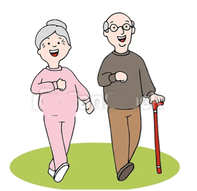
  • WALK  WALK  WALK!!!

Picture
Specific Conditions
 
Arthritis -      Osteo and Rheumatoid

  • In an acute phase
(pain, swelling, stiffness, heat around a joint)
Rest is best – start exercising as these symptoms subside

  • High impact exercises are tough on older joints and not wise on damaged arthritic joints

  • Maintaining a good range of movement in all joints is important “Use it or lose it”.

  • Muscle strength is important to help support joints
 
Osteoporosis

  • Postural exercises are important to minimise the development of that round-shouldered look

  • High impact exercises put too much stress on weakened bones, especially the back

  • Flexion (forward bend) of the spine with weights in the hands places too much stress on weak thoracic (mid back) bones

  • The more walking and weight bearing activity people do the better for bone density.
 
Total Hip Replacement
 
Those movements to be avoided over the first eight weeks (all patients have been told in hospital)

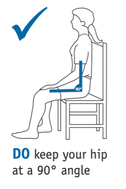
  • Hip and knee flexion of more than 90°
  • Avoid low chairs
  • Turning the leg inwards - “pigeon-toes” (internal rotation)
  • Avoid crossing the legs - sitting
  • Avoid crossing the legs – standing
  • No “grape vines”!
  • Avoid twisting the body and hence turning the leg inwards

​Total Knee Replacements
 
  • Work those thigh muscles (quadriceps)
  • Getting full leg extension – (the knee straight) is more important that full bend
  • Regaining knee bend takes time – avoid forcing it
  • Kneeling becomes very uncomfortable/impossible – best avoided
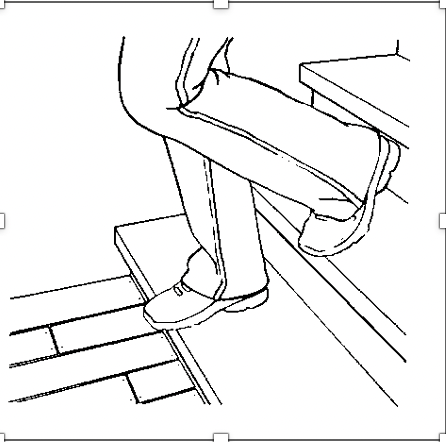
Hints for Stair Climbing – for troublesome hip or knee

  • One step at a time
 
  • Going up stairs
           Good leg up first

  • Going down stairs
           Bad leg down first
          “Up to Heaven, down to Hell”
Picture
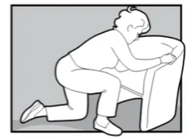
Getting down to the floor and up
 
Down to the floor      -           use a chair – seat to lean on
  • go down on one knee first (the bad leg)
  • then down on the second knee
  • hands to the floor (on all fours)
  • lower buttocks to the ground


Up from the floor      -           get on all fours next to a chair
  • put hands on the chair seat
  • bring good leg up to half kneeling position
  • use chair for support to rise to standing
 

Picture
Chest conditions and shortness of breath
 
  • Encourage participants to stop for a rest before they get very short of breath
 
  • Remember – you should be able to exercise and still talk!
 
  • Suggest stop-start exercise – intermittent rests
 
  • Keep reminding class they can do a slow/easier version of an exercise
 
 
Specific Movements to Stress
 
  • Dorsiflexion (foot up)
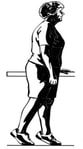
    • older folk tend not to lift their feet as high, hence can trip on very little      
 
  • Quadriceps Exercises (thigh muscle)
    • essential for all mobility and to protect knees
 
  • Sit/Stand Exercises          
           -  standing up easily is a very basic vital movement for independence and very good quads
              exercise – try slowly up and down (as long as                    knees are not sore)
 
  • Exercises to encourage getting knees fully straightened – more important than full bend ie inner range quads exercise
 
  • Hip extension – one of the first movements to become limited with hip arthritis
 
  • Shoulder exercises to encourage good posture.  Especially important for osteoporosis, ankylosing spondylitis where severe curvature of the thoracic spine can occur
 
  • Balance exercises are important to this age group and it does improve with practise!!
 
          -   encourage using support (a chair or wall) if confidence is lacking
         -    Or holding each other!
         -     progress to not holding on for these exercises
 

Suggestions
               
        -     walk on tip toes
       -       “heel-toe” walk
       -       heel walk
      -        exercises standing on one leg
      -        walking backwards


Comments are closed.

    Author

    Shonagh O'Hagan
    and Therapists at Therapy Professionals

    Archives

    January 2026
    December 2025
    November 2025
    October 2025
    September 2025
    August 2025
    July 2025
    June 2025
    May 2025
    April 2025
    March 2025
    February 2025
    January 2025
    December 2024
    November 2024
    October 2024
    September 2024
    August 2024
    July 2024
    June 2024
    May 2024
    April 2024
    March 2024
    February 2024
    January 2024
    December 2023
    November 2023
    October 2023
    September 2023
    August 2023
    July 2023
    June 2023
    May 2023
    April 2023
    March 2023
    February 2023
    January 2023
    December 2022
    November 2022
    October 2022
    September 2022
    August 2022
    July 2022
    June 2022
    May 2022
    April 2022
    March 2022
    February 2022
    January 2022
    December 2021
    November 2021
    October 2021
    September 2021
    August 2021
    July 2021
    June 2021
    May 2021
    April 2021
    March 2021
    February 2021
    January 2021
    December 2020
    November 2020
    October 2020
    September 2020
    August 2020
    July 2020
    June 2020
    May 2020
    April 2020
    March 2020
    February 2020

    All

    RSS Feed

Quick Links
Physiotherapy
Speech-Language Therapy
Music Therapy
Occupational Therapy
Dietetics
Phone: (03) 377 5280
Email:   [email protected]
Hours:  8:30am-4pm, Monday-Friday
Office: 12 Coronation St, Christchurch 
Postal address: PO Box 7807,
​                             Christchurch 8240
Disclaimer
Therapy Professionals makes every effort to ensure that the information provided on its web pages is accurate and up-to-date. Website content is subject to regular review and no warranty can be provided regarding the accuracy of it. © Therapy Professionals Ltd 2015. All rights reserved.