Therapy Professionals

  • Home
    • History >
      • Cantabrainers Choir
      • Tribute to Clare O'Hagan
    • Client Information
    • Rights and Responsibilites
    • Careers
    • Testimonials
  • Services
    • Assessment, Treatment & Consultation
    • Workplace/home safety
    • For organisations
    • Nail Trimming
  • Therapies
    • Physiotherapy
    • Speech-Language Therapy >
      • Communication
      • Swallowing
    • Music Therapy
    • Occupational Therapy
    • Dietetics
  • Gift Vouchers
  • Contact
  • Information
    • Information and Handy Hints
    • Blog
    • Links
    • Facebook
    • Events
    • Newsletters
  • Home
    • History >
      • Cantabrainers Choir
      • Tribute to Clare O'Hagan
    • Client Information
    • Rights and Responsibilites
    • Careers
    • Testimonials
  • Services
    • Assessment, Treatment & Consultation
    • Workplace/home safety
    • For organisations
    • Nail Trimming
  • Therapies
    • Physiotherapy
    • Speech-Language Therapy >
      • Communication
      • Swallowing
    • Music Therapy
    • Occupational Therapy
    • Dietetics
  • Gift Vouchers
  • Contact
  • Information
    • Information and Handy Hints
    • Blog
    • Links
    • Facebook
    • Events
    • Newsletters

Information and Handy Hints

January 10th, 2024

10/1/2024


Suitable floors for aged care environments
​

​Updating the flooring for aged care living communities makes an enormous difference to the safety, functionality and appearance of the interior spaces.
 
Suitable flooring for aged care living communities must be hardwearing, easy to clean, safe and cost effective.  The flooring’s manufacture and installation could also have a minimal impact on the environment.  Another consideration to take into account is the longevity of the flooring in aged care because its frequent replacement increases financial and environmental costs.
 
Flooring that meets these demands will help protect people and the planet and ensure that for many years residents’ floors remain attractive, safe and comfortable.
 
The right flooring will ensure that residents, staff and visitors feel comfortable and welcome.
 
Safety

It is important that the type of flooring in aged care meets the necessary safety precautions to reduce trip and slip hazards. A uniform finish with anti-slip surface properties is vital.
 
Some of the best flooring products for wet areas provide a non-slip surface with embossed and particle enhanced surface that are slip resistant and reduce aquaplaning.
 
Ceramic and porcelain tile should also be avoided because wide grout joints or uneven tiles can create a tripping risk.
 
Vinyl flooring is easy to walk on without slipping.  Vinyl is generally a harder flooring surface than cork and rubber which makes it less forgiving when it comes to falls.
 
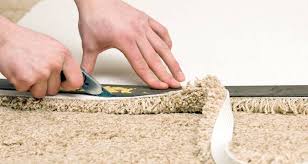
While some carpet is more difficult to manoeuvre wheelchairs on, when installed correctly, wall to wall carpeting is smooth, soft and comfortable with a minimal slip hazard.  Carpet is especially ideal in colder regions because it provides warmth underfoot and adds a cosy ambiance.
 
When considering flooring safety, understanding how it affects indoor air quality is essential.  The underlay and adhesives used in installation of some flooring can emit volatile organic compounds (VOC’s) and can cause respiratory irritation, allergies, headaches and asthma.
Easy to clean
 
A most important requirement for aged care flooring in almost every room is that it is hygienic and easy to clean.  To ensure that no dirt or fluids can get trapped in the surface of the flooring it is best to choose flooring solutions with little or no texture.
 
Linoleum is naturally antibacterial and antistatic, as well as durable, flexible, and sound absorptive.  Linoleum is very easy to clean, maintain and disinfect although it is not quite as stain resistant as vinyl.
 
Vinyl is also comfortable to walk on, it is easy to clean and maintain and is often manufactured with antimicrobial additives.
 
Resin is another popular choice in aged care environments for its ability to deliver on each functionality, durability and safety demands.
 
Epoxy coatings are fast curing and have tremendous advantages for keeping it clean compared to conventional flooring solutions.
 
Hardwearing
 
In aged care facilities, the flooring needs to be sturdy enough to withstand foot traffic as well as wheelchairs, laundry and other trolley traffic.
 
The right flooring can make an essential contribution to the quality of the facility where it can endure these activities that would normally result in unappealing, unserviceable and unsafe damage. 
 
The durability of resin systems is a distinct advantage in environments such as aged care, as it can    withstand the inevitable scuffs, scrapes, scratches, and spillages that it will be subjected to and maintain its aesthetic and functional properties for the long term.  Seams or joins in flooring is one factor that contributes to flooring deterioration.  Sheet vinyl with the least joins possible is a good choice for durability.

Aesthetics
 
 A plain white floor finish may help to make an interior appear larger, but it can look severe, cold and characterless.  The addition of colour in the surface or with safety mats can help the interior to look less clinical and more friendly.  
 
Creating the right atmosphere is important, but no matter how colourful or decorative the floor is, with cracks and dirt it rapidly becomes hazardous and creates a negative impact on the site.
 
Resin can provide a colourful and cheerful environment and yet it is seamless and is robust enough to cope with the demands of aged care residential communities.
​Acoustics

Carpet remains a popular choice in some areas of aged care residence for comfort and acoustic reasons.  Carpet softens harsh sounds and create a quieter more peaceful indoor environment.
 
Carpet can be a cost-effective option for administrative areas where replacement and heavy traffic is not such a major concern.  The soft nature of carpet immediately minimises sound from footsteps, chairs scraping and objects falling on the floor.
 
Specialised carpet with open yarn structures is designed to trap sound and the intelligent backings are engineered to hold the sound instead of reflecting it.  These ‘acoustic carpets’ act as strong absorbers for medium and high frequencies, achieving maximum sound absorption in the frequency range of speech.
 
Carpet tiling is also used to great effect in non-critical care spaces.  It is popular for its ease of installation and replacement and for the variety of patterns and colours available.
 
A drawback with carpet is that completely removing harmful air contaminants from carpets can be difficult even with regular cleaning and vacuuming.
 
Cork floors have been popular for decades for its sound softening properties as well as its natural rich deep undertones.  However a disadvantage is that while its natural surface repels moisture, standing water an permeate the joints which can cause damage on cork floor in bathrooms or laundry areas.
 
Natural rubber tiles or rolled rubber flooring are also sound absorbing options for aged care living communities.  Rubber is a rapidly renewable resource, making it very durable and a good shock and sound absorber. It is available in many colours and has a natural finish that gets better over time.  It is also naturally antibacterial and requires very low maintenance.
 
Sustainable
 
Suitable flooring in aged care settings should also be considered in terms of  its sustainability.  The key environmental impact of flooring comes from the energy required to manufacture it, the kinds of raw materials used in its manufacture, and the products required for the surface treatment and glue.
 
Various sustainable flooring options suitable for aged care settings are produced from recycled and recyclable materials that do not compromise on safety, design or durability.
 
Sustainable carpet and carpet tiles made from regenerated and renewable yarn is one such choice.
 
However, carpet backing or underlay is one of the main sources of Volatile Organic Compounds (VOC’s).  So it is important to make sure that the product under the chosen sustainable flooring is also non-toxic and comes from a sustainable and renewable source.
 
Recycled plastic bottles are some of the materials that can be converted into a soft, and durable felt carpet underlay that benefits acoustics, comfort levels and the environment.
 
Cork is an all-natural, biodegradable and renewable product with a long lifespan when it is maintained properly. Cork is harvested from the bark of cork trees, so the same tree can be periodically harvested over and over for up to 250 years.
 
Cork is flexible, holds warmth and softens sound, and with a shock absorbent structure it all adds up to comfort underfoot.
 
Linoleum is made from natural resources, so it is easily recycled and biodegradable.  At the end of its life, linoleum can be turned into an energy recycling incineration plan or garden compost.
 
Hygienic
 
Hygiene, infection prevention and antimicrobial resistance is also a major consideration when selecting, flooring particularly in an aged care setting.
 
Epoxy solutions are a hygienic flooring option in areas where hygiene is particularly important such as bathrooms and kitchens.  Over the years resin floors have become renowned as the strong, durable and safe option for commercial and residential floors.
 
In these areas the floor is best when it is seamless, waterproof, and easy to clean.  It must also withstand the wear and tear if excessive foot traffic and thermal shock from hot ovens, heavy equipment and spillages of corrosive foodstuffs for the long term.
 
Robust polyurethane systems with an antimicrobial additive are highly recommended for these areas.
 
There are many flooring options appropriate for aged care residential communities that transform the overall appearance of the interior, minimise the impact on the environment, keep maintenance and replacement costs low and, most importantly, support the safety needs of the residents.
 
 
Aged care NZ Issue 02 2022
 

Comments are closed.

    Author

    Shonagh O'Hagan
    and Therapists at Therapy Professionals

    Archives

    December 2025
    November 2025
    October 2025
    September 2025
    August 2025
    July 2025
    June 2025
    May 2025
    April 2025
    March 2025
    February 2025
    January 2025
    December 2024
    November 2024
    October 2024
    September 2024
    August 2024
    July 2024
    June 2024
    May 2024
    April 2024
    March 2024
    February 2024
    January 2024
    December 2023
    November 2023
    October 2023
    September 2023
    August 2023
    July 2023
    June 2023
    May 2023
    April 2023
    March 2023
    February 2023
    January 2023
    December 2022
    November 2022
    October 2022
    September 2022
    August 2022
    July 2022
    June 2022
    May 2022
    April 2022
    March 2022
    February 2022
    January 2022
    December 2021
    November 2021
    October 2021
    September 2021
    August 2021
    July 2021
    June 2021
    May 2021
    April 2021
    March 2021
    February 2021
    January 2021
    December 2020
    November 2020
    October 2020
    September 2020
    August 2020
    July 2020
    June 2020
    May 2020
    April 2020
    March 2020
    February 2020

    All

    RSS Feed

Quick Links
Physiotherapy
Speech-Language Therapy
Music Therapy
Occupational Therapy
Dietetics
Phone: (03) 377 5280
Email:   [email protected]
Hours:  8:30am-4pm, Monday-Friday
Office: 12 Coronation St, Christchurch 
Postal address: PO Box 7807,
​                             Christchurch 8240
Disclaimer
Therapy Professionals makes every effort to ensure that the information provided on its web pages is accurate and up-to-date. Website content is subject to regular review and no warranty can be provided regarding the accuracy of it. © Therapy Professionals Ltd 2015. All rights reserved.